
Aero Vodochody L-39ZA Albatros
Current Status:
Flyable
History:
The Aero L-39 Albatros is a high-performance jet trainer designed and produced by Aero Vodochody in the Czech Republic. In addition to performing basic and advanced pilot training, it has also flown combat missions in a light-attack role. Despite its manufacturing origin in the Warsaw Pact, the L-39 never received a NATO reporting name.
The L-39 Albatros was designed during the 1960s as a successor to the Aero L-29 Delfín, an early jet-powered principal training aircraft. Performing its maiden flight on 4 November 1968, it became the first trainer aircraft in the world to be equipped with a turbofan powerplant. Quantity production of the L-39 Albatros proceeded in 1971; one year later, it was formally recognized by the majority of the Warsaw Pact countries as their preferred primary trainer.
Accordingly, thousands of L-39s would be produced for various military customers in Eastern Europe. Additionally, it was exported to a range of countries across the world both as a trainer and a light-attack aircraft. Since the 1990s, it has also become popular among civilian operators. By the end of the century, in excess of 2,800 L-39s had served with over 30 air forces.
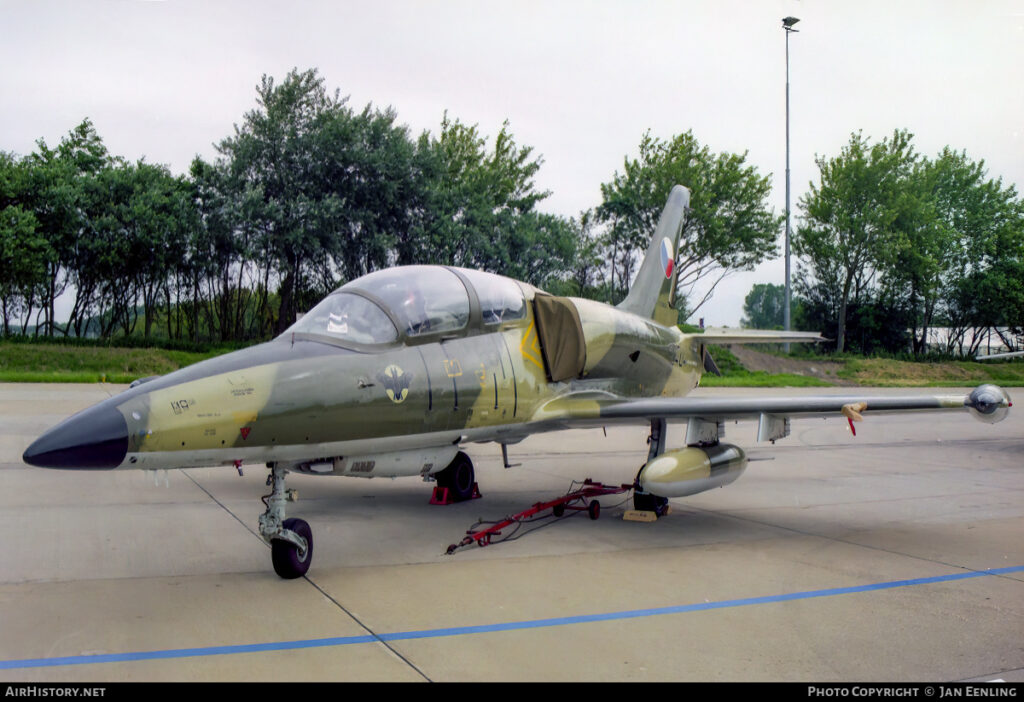
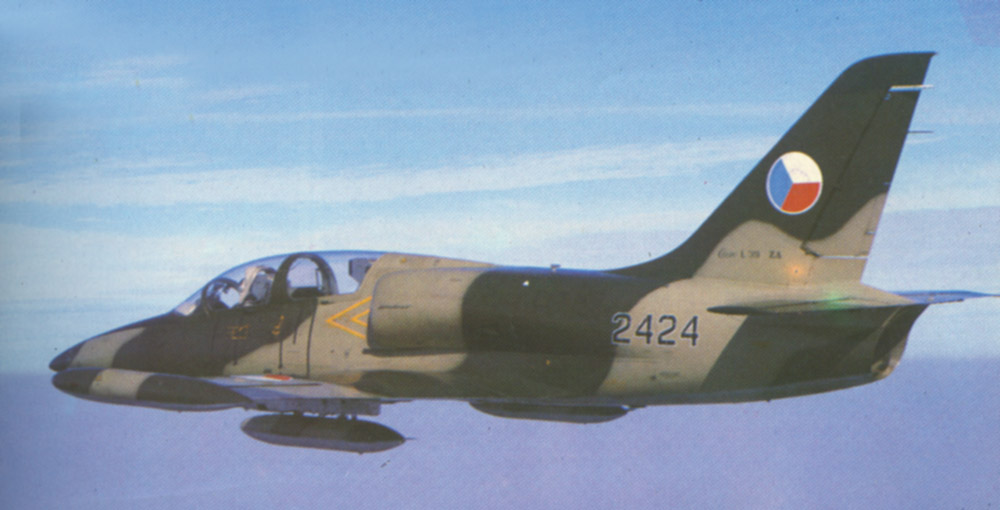
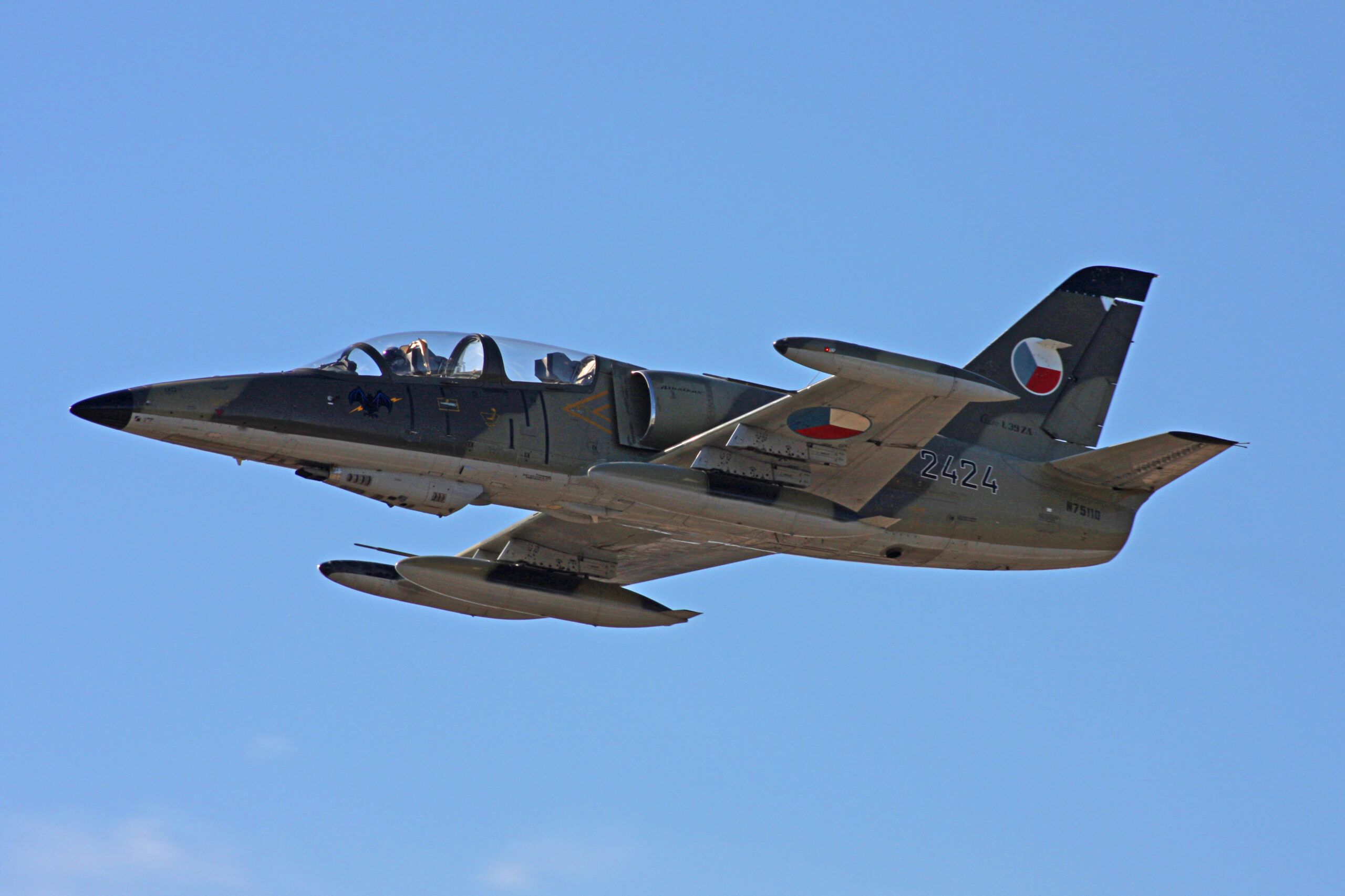
Derived from the L-39ZO in 1976 the L-39ZA Light Combat Variant, which was fitted with a single Gryazev-Shipunov GSh-23cannon mounted underneath the fuselage in addition to the four hard points and strengthening upon the design of the L-39ZO, made its maiden flight in September of 1976 going into full production in 1977 of which 208 were produced and delivered. The L-39ZA was designed to provide fulfillment of a wide range of air-to-air and air-to-ground missions, and improving pilots’ weapons training to Warsaw Pact Air Forces and their allies. The ZA Featured upgraded capabilities for armed weapons training and light attack, employing sturdier landing gear, a higher payload (total 1,290 kg (2,844 lb)) and notably the GSh-23L 23-millimeter twin-barreled cannon attached in a conformal pod under the fuselage, having a 150-round magazine within the airframe. Upgraded weapons pylons allowed for a variety of air to ground weapons, and it was also wired to carry K-13 (AA-2 ATOLL) or R-60 (AA-8 APHID) air-to-air missiles on the outer weapons pylons.
About Our Aero Vodochody L-39ZA Albatros:
The American Airpower Museum Aero L-39ZA was acquired in its stock condition from the Czech Air Force in 2007. Manufactured in 1982 our L-39ZA Served in the Czechoslovakian Air Force during the Cold War, and then with the Czech Republic Air Forces after the fall of the Soviet Union and separation of the Czech Republic and Slovakia. Our L-39ZA’s Warsaw Pact and Czech Air Force unit history prior to transferring into civilian operation at the American Airpower Museum is as follows:
- 30 November 1982 – 1 May 1985 with the 30th Fighter‑Bomber Air Regiment (30. stíhací bombardovací letecký pluk)
- 1 May 1985 – 31 December 1992 with the 1st Fighter Air Regiment (1. stíhací letecký pluk)
- 1 January 1993 – 1 April 1994 with the 1st Fighter Air Regiment (Czech Air Force)
- 1 April 1994 – ~September 1999 with the 32nd Tactical Air Force Base (32. základna taktického letectva)
- September 1999 – 1 December 2003 with the Air Testing Department (Letecký zkušební odbor)
- 1 December 2003 – 19 February 2005 with the 221st Tactical Squadron (221. taktická letka)
The L-39ZA arrived at the American Airpower Museum in 2007 and has been part of the “Cold War Collection” and is on display at the museum and often at airshows up and down the east coast. You can see it flying regularly during the summer, and winter months.